


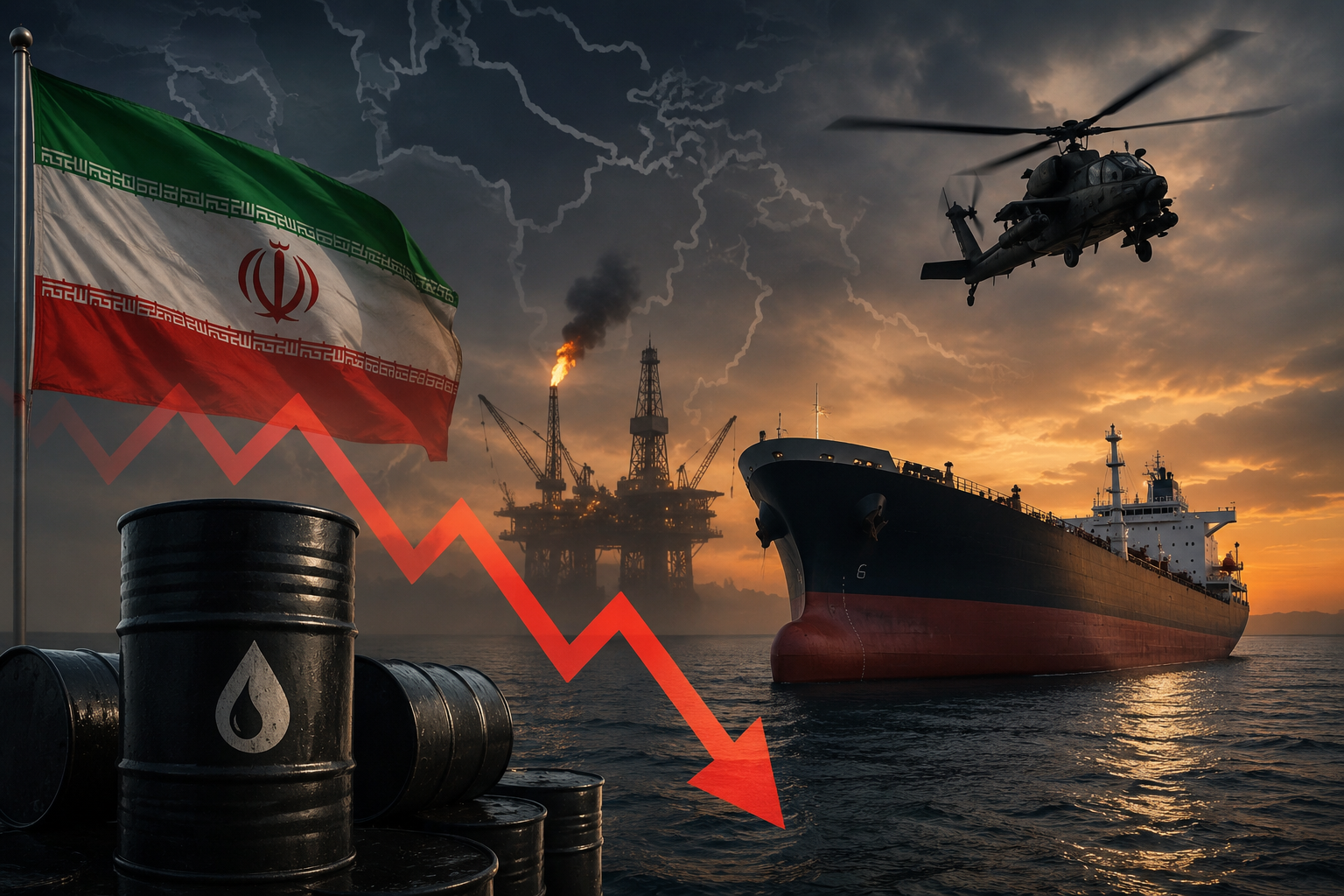
Irans oil exports have dropped sharply to their lowest in years. This shows how tighter sanctions and shipping restrictions are affecting the country. Demand from buyers is also weakening.
- Industry trackers estimate that Iran exported around 200,000 to 260,000 barrels of oil per day in May. This is a decline from earlier this year. The drop comes after months of increasing pressure on Iran’s energy sector. Restrictions on trade and oil transportation have gotten tougher in the Gulf region.
Analysts say the decline is due to challenges, financial restrictions, and buyers not wanting as much oil. China, Iran’s customer, has bought less oil. This is because refining margins are softer and fuel inventories are ample.
Iranian oil is now trading at discounts compared to benchmark prices. The slowdown has reduced exports. Affected Iran’s offshore oil storage. A lot of oil is stuck at sea while producers look for buyers and transportation options. Observers warn that if restrictions continue, Iran may struggle to maintain production levels.
Energy markets are watching developments closely. Iran is an oil producer in the region. If its exports are disrupted for a time, it could tighten global supply balances and cause price volatility. This is especially true if geopolitical tensions persist around shipping routes.
Despite challenges, analysts note that Iran still exports some oil. This is primarily through established trade channels. However, current export levels are below historical averages. They represent one of the significant declines in recent years. Looking ahead, market participants will focus on developments, sanctions policy and the security situation across key maritime corridors.
If restrictions ease, export flows could revive. Continued pressure may further constrain Tehran’s ability to access energy markets. For oil traders, the situation shows how important Middle Eastern energy supplies are. Geopolitical developments can greatly influence commodity markets. Until there’s clarity, uncertainty will remain a defining feature of the region’s oil trade outlook.