


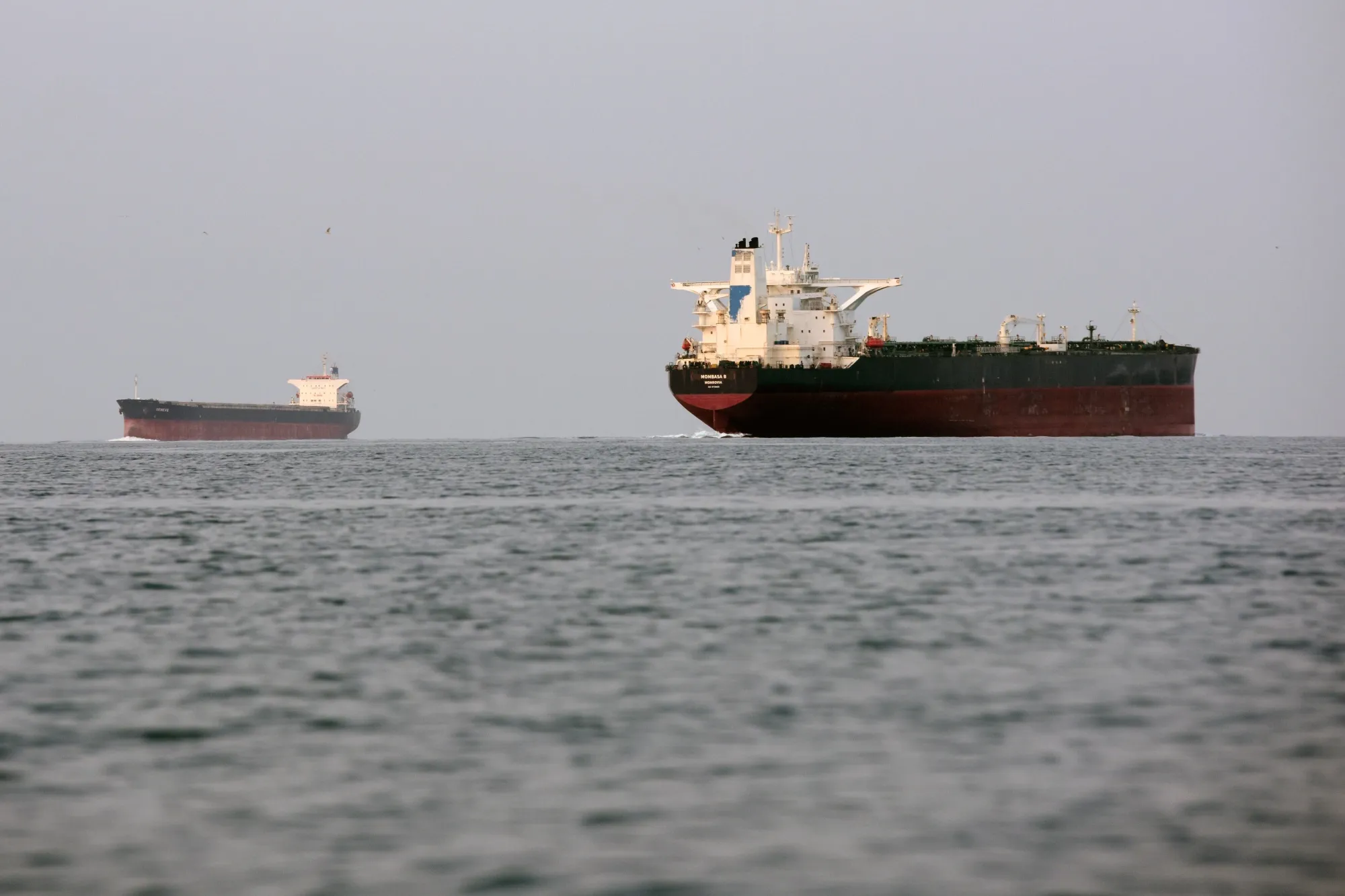
Dubai: Oil tankers are exploiting a “dark” traffic route to avoid attacks on tankers in the strategic Strait of Hormuz, allowing Gulf producers to continue pumping oil despite fears and assaults.
According to Kpler, a shipping data analytics firm, roughly 80% of vessels that have transited the Strait of Hormuz in the last two weeks had their Automatic Identification System (AIS) tracking devices turned off.
Ships using the alternate route were in proximity to Oman and kept away from the Iranian part of the waterway. The U.S. military has aided the flow of commerce by assisting traders in navigating this southern route through the Strait of Hormuz.
How “dark” tankers utilize the alternate route
This method ensures the safety of oil tankers by reducing the risk of drone strikes or missile attacks while allowing Gulf states to continue exporting oil.
Furthermore, Gulf states are utilising a ship-to-ship transfer technique to transfer oil from tankers to other vessels, allowing them to avoid the Strait of Hormuz.
The Greek-owned supertanker, Kiku, is one example of a vessel that has adopted this method. It can be seen in the image below that it departed Qatar’s Mesaieed terminal and later vanished from the tracking system after traversing the Hormuz Strait.
The “dark” fleet provides a unique insight into the flow of trade around the Persian Gulf, allowing ships to pass unhindered despite the concerns that they are not visible on standard tracking systems.
Millions of barrels of oil are crossing the strait every day despite the threats. According to the U.S. Department of Energy, there are still approximately eight to nine million barrels of oil crossing the Strait of Hormuz per day.
According to experts who participated in the discussion, 5 million barrels of crude oil were exported from the Arabian Gulf through routes patrolled by U.S. warships in July.
Shifting some traffic to other routes has also resulted in significant reductions in oil deliveries.
For example, Saudi Arabia diverted five million barrels of oil per day from its East-West pipeline to the Red Sea. In addition, other carriers have been rerouted around the Strait of Hormuz.
Nevertheless, the workaround carries its own risks. According to reports, fifteen ships that took the southern route around Iran have been attacked since June. Additionally, according to the U.S. military, they have provided security for over a thousand commercial vessels in the Persian Gulf.
This “dark” fleet is giving the global economy a much-needed boost; however, it is only a short-term solution to a long-term problem. There will still be an insurmountable risk to oil supplies if traffic through the Strait of Hormuz is not resumed.