


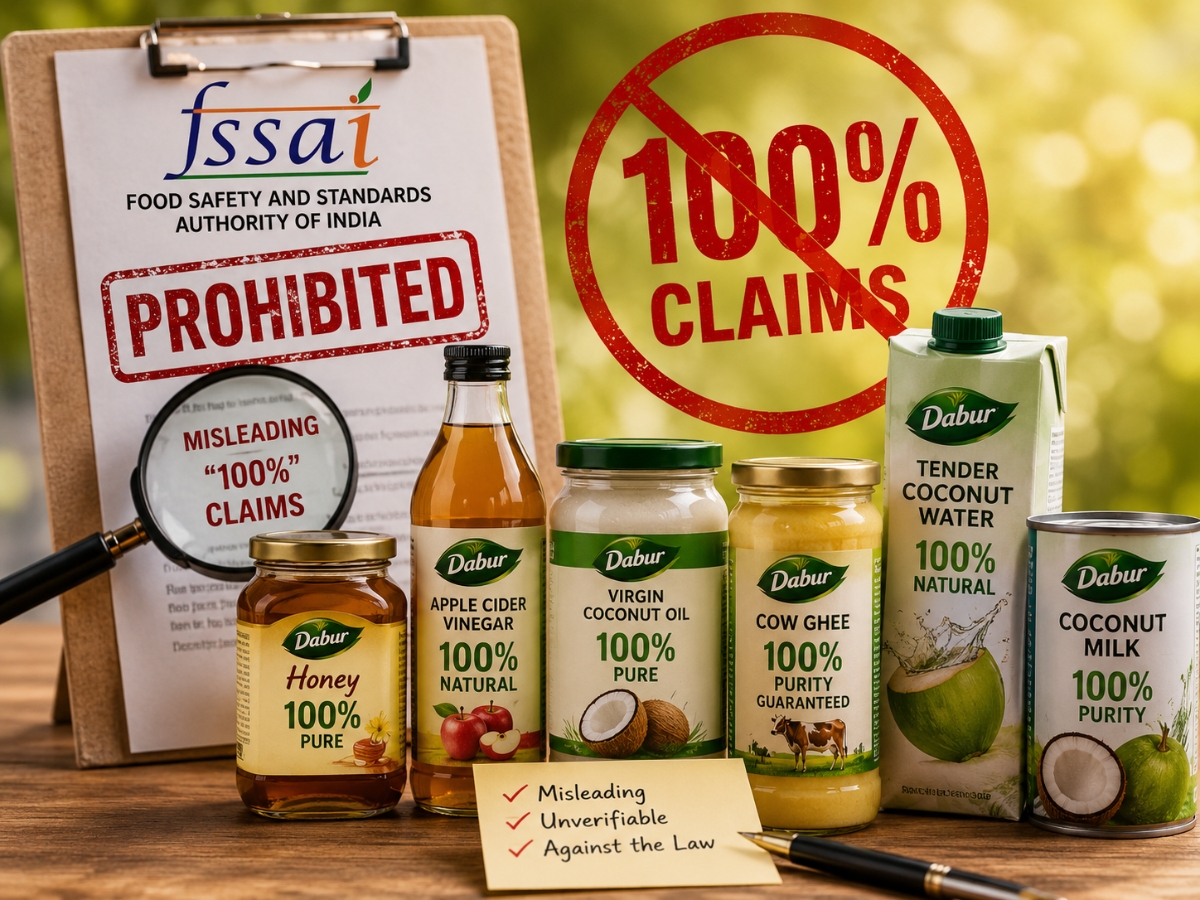
India’s food safety regulator has directed Dabur India to immediately stop selling several food products carrying “100%” marketing claims, saying the labels are misleading, unverifiable and in violation of advertising regulations.
The Food Safety and Standards Authority of India (FSSAI) said products listed on Dabur’s website featured claims such as “100% Natural,” “100% Pure,” “100% Purity Guaranteed,” and “100% Organic.” According to the regulator, these statements cannot be objectively verified and may create a false impression among consumers about the products’ quality and composition.
The order applies to a range of products, including honey, apple cider vinegar, virgin coconut oil, sesame oil, cow ghee, coconut water and coconut milk, as well as other food items using similar promotional claims.
FSSAI also raised concerns over Dabur Hommade Coconut Milk, stating that its “100% Purity” claim was not permissible for compound food products under current regulations.
In addition, the regulator said Dabur Himalayan Organic Apple Cider Vinegar and Dabur Organic Honey displayed the Jaivik Bharat logo without valid organic certification or endorsement from the authority. The Jaivik Bharat mark is intended to identify food products that meet India’s official organic certification standards.
The regulator noted that Dabur had previously been instructed to remove or modify the disputed claims but had not taken satisfactory corrective action. As a result, FSSAI has now directed the company to discontinue sales of the affected products until the claims are addressed.
Dabur has also been asked to submit an Action Taken Report within 15 days, detailing the steps taken to comply with the regulator’s order. The development weighed on investor sentiment, with Dabur India shares falling more than 4% during Tuesday’s trading session.
The action reflects the regulator’s continued efforts to tighten oversight of food labelling and advertising practices, ensuring that product claims are evidence-based and do not mislead consumers. Companies marketing food products in India are required to ensure that promotional statements comply with FSSAI’s advertising and claims regulations before they are used on packaging or digital platforms.