


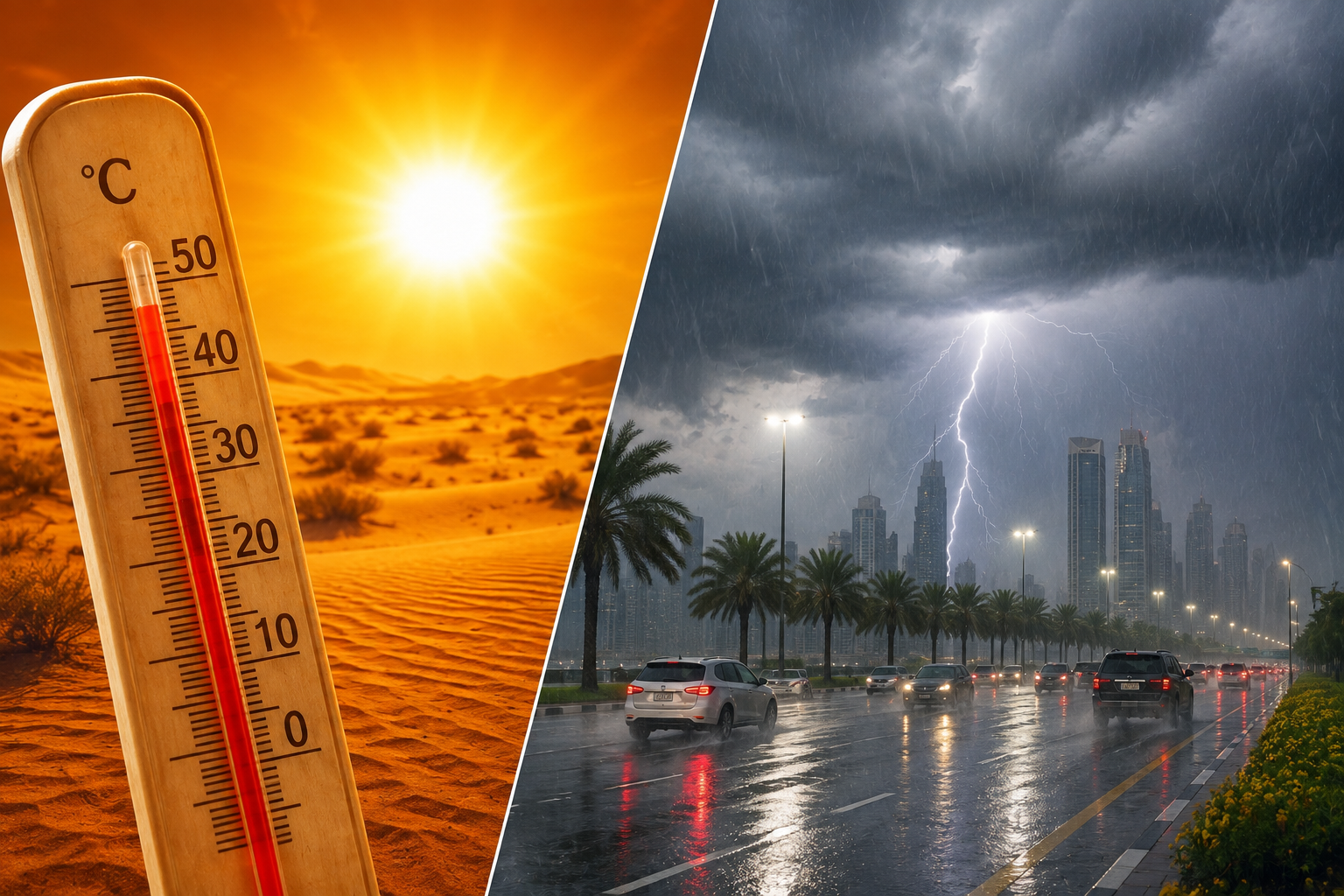
The UAE witnessed a striking contrast in weather conditions on Tuesday, with temperatures soaring above 50°C in parts of Abu Dhabi while thunderstorms and heavy rain brought relief to several other regions.
According to the National Centre of Meteorology (NCM), the highest temperature recorded was 50.1°C in Owtaid, Al Dhafra, at 2:15 pm. Other scorching hotspots included Mezaira’a at 50°C, Al Shawamekh at 49.6°C, Madinat Zayed at 49.3°C, and the Western Region Border Guard area at 49.2°C, highlighting the intense summer conditions across the emirate’s desert interior.
Despite the extreme heat in western parts of the country, changing atmospheric conditions triggered convective cloud formation later in the day, leading to widespread showers and thunderstorms across several emirates.
Rainfall was reported in Abu Dhabi, Al Madam and Faili in Sharjah, Al Manama, Al Haniyah south of Ras Al Khaimah, and Thoban in Fujairah. Thunderstorms were also observed over central regions, bringing brief but significant rainfall that contrasted sharply with the sweltering desert temperatures experienced earlier in the afternoon.
Meteorologists say the current weather pattern is typical for the UAE’s peak summer period, when intense daytime heating combines with moisture and mountainous terrain to produce afternoon convective clouds. While western desert regions continue to experience extreme temperatures, eastern and central areas remain susceptible to isolated thunderstorms and localised rainfall.
The NCM’s latest temperature map reflected the country’s diverse weather conditions, with readings ranging from around 32.5°C in the northern mountainous regions to over 50°C in inland Abu Dhabi.
With Jamrat Al Qayth, traditionally regarded as the hottest phase of the UAE summer, expected to continue through mid-August, residents can anticipate further episodes of extreme heat alongside isolated afternoon thunderstorms in parts of the country.
Authorities continue to advise residents to avoid prolonged outdoor exposure during peak afternoon hours, stay hydrated, monitor official weather updates, and exercise caution while driving during heavy rain and reduced visibility caused by thunderstorms.