
The war between the United States, Israel, and Iran has now entered its third day, and the fallout is being felt across the entire Gulf region. The conflict erupted after joint US-Israeli strikes reportedly killed Iran’s Supreme Leader, Ayatollah Ali Khamenei, setting off a wave of retaliatory attacks by Iran and further Israeli operations targeting Tehran.
A Region on Edge
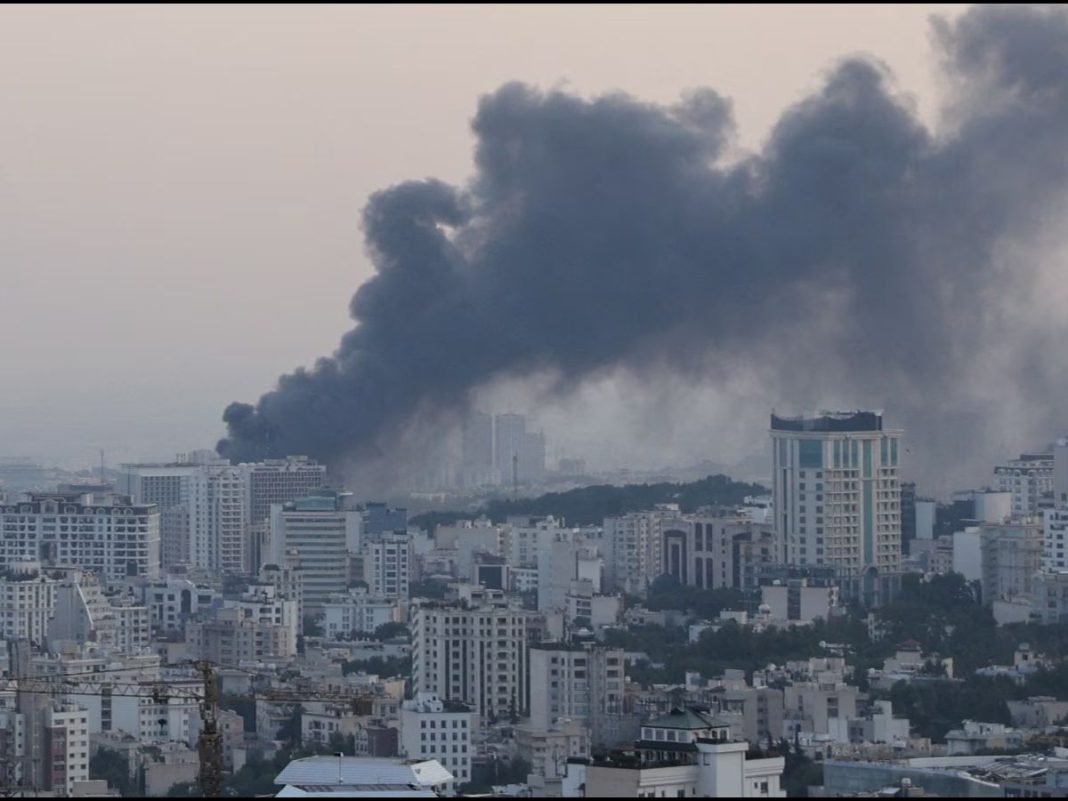
Over the past 24 hours, the violence has escalated sharply. Reports indicate Iranian missiles and drones have struck several locations across the Middle East. In Kuwait, multiple US fighter jets are said to have crashed, while a major Saudi oil refinery caught fire—images of smoke billowing over the facility now circulating widely. Fatalities have also been reported in Oman and Bahrain, underscoring the growing human toll and the risk of broader regional instability.
US Forces Push Forward
The United States Central Command has released images showing fighter jets launching from the USS Abraham Lincoln, now a hub for ongoing operations dubbed “Operation Epic Fury.” US military activity in the region remains intense, with both defensive and offensive missions underway in coordination with allies.
UAE Stays Vigilant
So far, the UAE has not reported any direct attacks or casualties, but authorities are leaving nothing to chance. As a precaution, flight operations at all major UAE airports have been suspended, and both the Dubai and Abu Dhabi stock markets have been temporarily closed to prevent financial volatility. The General Civil Aviation Authority is closely monitoring airspace, while financial regulators coordinate to maintain stability.
Ripple Effects Across the Gulf
The conflict’s impact extends well beyond the battlefield. Airlines have cancelled or rerouted flights across the GCC, leading to widespread travel disruptions. Oil and gold prices have become increasingly volatile, reflecting the uncertainty gripping global markets. Across the region, security has been tightened and emergency response plans activated.
What’s Next for Residents?
With the situation evolving by the hour, officials urge the public to stay informed through official sources, heed airline and airport announcements, and resist sharing unverified rumors. Regional governments are walking a tightrope—responding to immediate security threats while working behind the scenes to prevent the conflict from spreading even further.
As Day 3 unfolds, the message is clear: caution, cooperation, and calm are essential as the region faces one of its most challenging moments in years. Further updates are expected as the situation develops.