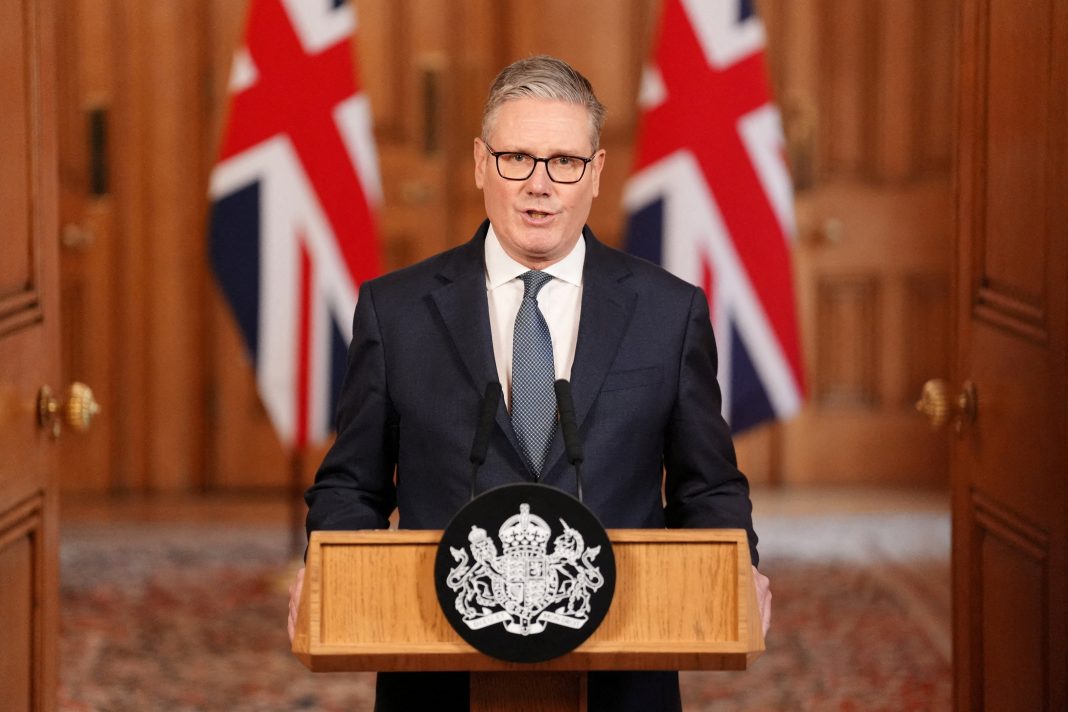

British Prime Minister Keir Starmer has sounded the alarm over Iran’s increasingly aggressive actions, warning that the regime’s approach is “becoming even more reckless, more dangerous” as the crisis in the Middle East deepens. His remarks come after a series of dramatic escalations, including the reported killing of Iran’s Supreme Leader Ayatollah Ali Khamenei in a joint American-Israeli strike.
Starmer addressed the nation in a video statement on March 2, confirming that the United Kingdom has given the United States permission to use British military bases as part of a coordinated response to the ongoing tensions. He cited direct threats to British personnel and interests as the primary reason for this decision.
In the wake of Khamenei’s death, Iranian forces have launched a wave of strikes targeting Western military bases, Israel, and cities across the Gulf region. Starmer revealed that a British base in Bahrain was hit—fortunately, the strike narrowly missed British personnel. A base in Cyprus was also reportedly targeted by an Iranian drone.
“The death of the supreme leader will not stop Iran from launching these strikes — their approach is becoming even more reckless and more dangerous to civilians,” Starmer warned. He emphasized that, while the UK still prefers a negotiated settlement to the crisis, Iran’s actions have left London with few alternatives.
Starmer also confirmed that British fighter jets are actively engaged in the region as part of coordinated defensive operations. “We have British jets in the air, as part of coordinated defensive operations, which have already successfully intercepted Iranian strikes,” he said.
With around 200,000 British nationals living across the Gulf, the safety of citizens is a top priority for the UK government. Starmer stressed that British forces are ready to act in defense of their people, interests, and allies—just as they have in past regional crises and always in accordance with international law.
The prime minister’s message is clear: the UK is responding to the new reality of heightened risk in the region with both military readiness and ongoing diplomatic efforts, determined to protect its citizens and push for a peaceful outcome—even as the path forward grows more uncertain.