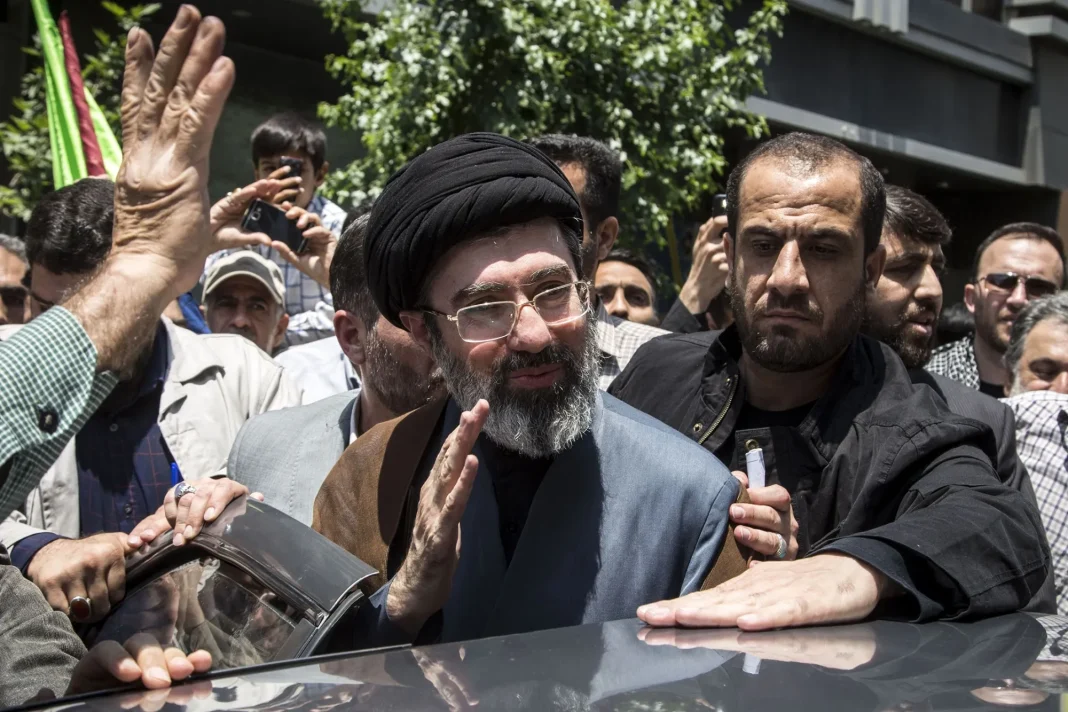

Mojtaba Khamenei, the 56-year-old son of Iran’s recently slain Supreme Leader Ali Khamenei, is rapidly emerging as the top contender to inherit the country’s most powerful position. According to Iranian officials cited in international media, Mojtaba’s name has surfaced prominently in urgent, behind-the-scenes discussions among senior clerics of the Assembly of Experts—the body charged with selecting the next Supreme Leader.
The succession talks come in the immediate aftermath of Ali Khamenei’s death in reported US-Israeli strikes, a moment of acute crisis for Iran’s leadership. While the Assembly of Experts has made no formal announcement, insiders say Mojtaba commands significant support. Some clerics, however, are urging caution, warning that hasty declarations could put him directly in the crosshairs as the regional conflict rages on.
So who is Mojtaba Khamenei? Born in Mashhad in 1969, he studied Islamic theology in the revered Qom seminary and joined the Islamic Revolutionary Guard Corps (IRGC) as the Iran-Iraq War drew to a close. Though he’s never held a formal government post, Mojtaba has worked in his father’s office for decades, quietly building deep ties within the powerful security establishment. He’s been described as a gatekeeper and power broker with a reputation for shaping policy from behind the scenes. Critics point to his alleged role in election management and the suppression of dissent, particularly following the disputed 2009 presidential vote.
His strongest backing comes from the IRGC, Iran’s elite military force. Analysts say the Guards favor him for his crisis management experience, insider status, and alignment with the regime’s hardline security approach. Iran expert Vali Nasr notes that Mojtaba’s appointment would signal a consolidation of power by the country’s most conservative elements.
The process of choosing a new leader is rare—this is only the second time since the 1979 Islamic Revolution that the Assembly of Experts has faced such a decision. Other names reportedly in the mix include Alireza Arafi and Seyed Hassan Khomeini, both considered more moderate than Mojtaba.
Ultimately, the Assembly’s choice will shape Iran’s future at a moment of war and domestic pressure. Should Mojtaba Khamenei step out from the shadows into the spotlight, it would mark a decisive turn toward security-first leadership in one of the most volatile periods in Iran’s modern history.