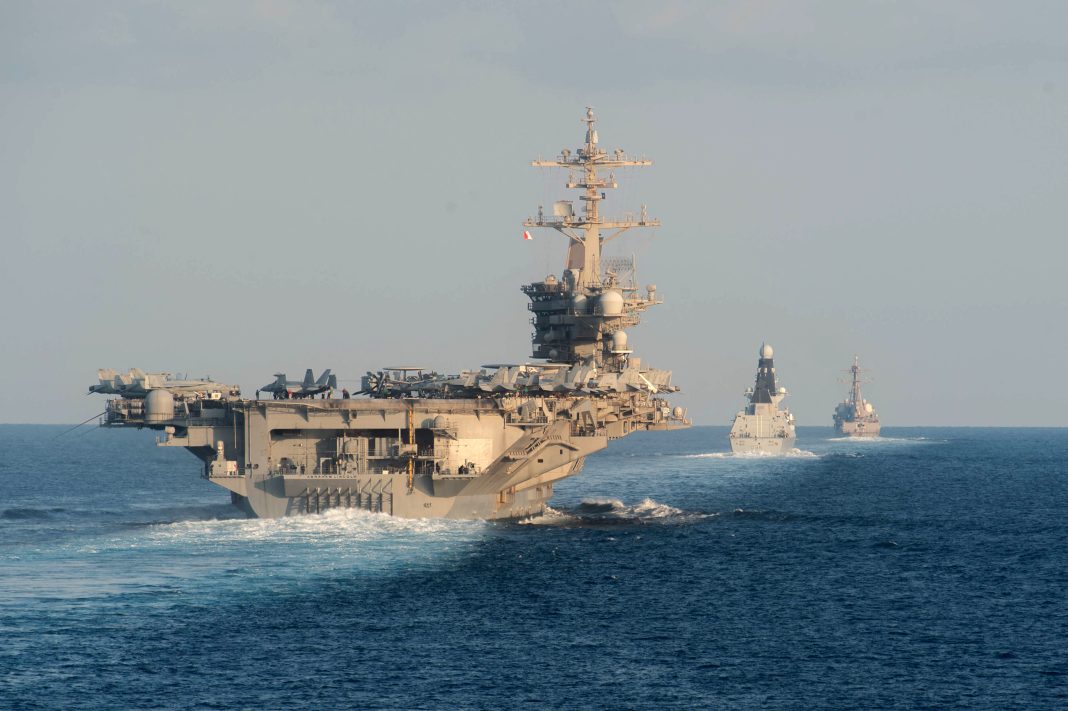

The United States is flexing its military muscle near Iran, assembling a formidable naval force as tensions with Tehran escalate and nuclear diplomacy hangs in the balance.
Currently, about one-third of the US Navy’s deployed fleet is stationed in or around the Middle East—a rare display of power. Leading the charge are two carrier strike groups: the USS Abraham Lincoln, operating in the waters south of Iran, and the USS Gerald R. Ford, hailed as the world’s most advanced aircraft carrier, now making its way toward the region. Alongside these carriers are approximately 15 guided-missile destroyers, submarines, supply ships, and a fleet of heavy-lift aircraft and aerial refuelling tankers stationed across the Mediterranean.
President Donald Trump has made it clear that this buildup is more than a show of force. He’s using it as leverage in ongoing nuclear negotiations with Iran, warning that if no deal is reached, Tehran could face “something very tough.” With such a concentration of naval power, Washington is keeping all options on the table—from deterrence patrols and defensive posturing, to the potential for precision strikes if the situation deteriorates. Military analysts say the combined strike groups could launch hundreds of Tomahawk missiles in a coordinated attack, should orders come.
The military surge comes on the heels of renewed indirect talks between the US and Iran, with the hope of curbing Iran’s nuclear program and preventing a wider regional crisis. But American planners aren’t just preparing for conventional threats. Iran has invested heavily in drone swarms, fast-attack boats, and anti-ship ballistic missiles like the Khalij Fars.
To counter these risks, US carrier groups rely on a layered defense system: the Aegis Combat System, medium- and long-range missile interceptors, rapid-fire close-in weapon systems, and cutting-edge technology like directed-energy weapons and high-powered microwaves—designed to neutralize drone threats more efficiently and cheaply than traditional missiles.
The stakes are high not just for regional security, but for global markets. The US presence near the Strait of Hormuz—a narrow waterway through which about 20% of the world’s oil passes—has stoked fears of volatility in energy prices.
For Iran, a military escalation could mean deeper economic isolation and spillover effects across the region. For the US, the strategy is clear: project overwhelming strength, but keep the door open for diplomacy. Whether this powerful armada leads to compromise or confrontation will likely depend on what happens in the next round of negotiations.