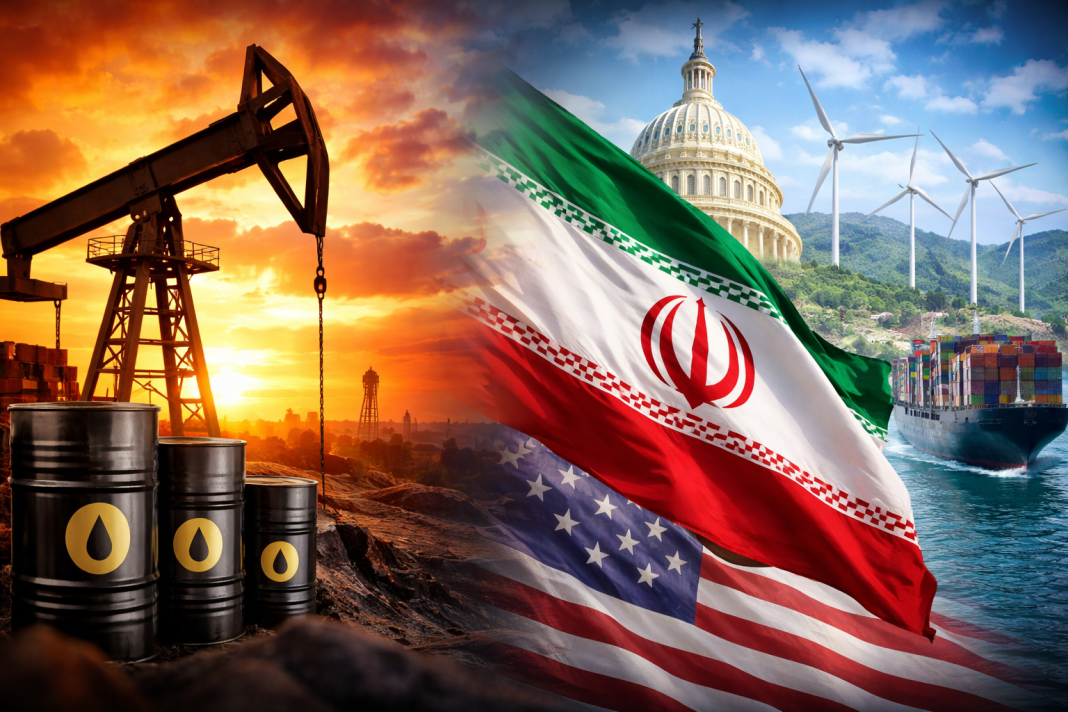

Oil prices settled higher on Friday, reversing earlier losses as investors grew increasingly worried that talks between the United States and Iran hadn’t done much to ease the risk of a potential military conflict.
Brent crude futures closed up 50 cents, or 0.7%, at $68.05 a barrel, while U.S. West Texas Intermediate (WTI) crude rose 26 cents, or 0.4%, to $63.55 a barrel.
Both benchmarks had fallen in overnight trading, but prices climbed during the U.S. session, gaining more than $1 a barrel at one point before pulling back toward settlement.
Iran and the United States held indirect negotiations on Friday, mediated by Oman, aimed at resolving long-standing disputes over Tehran’s nuclear program. Iranian state television later reported that the talks had ended, with negotiators heading back to their capitals for consultations, while discussions were expected to continue.
Analysts said the uncertainty around the talks kept markets on edge. Iran has been trying to keep discussions focused on nuclear issues, while Washington wants to broaden the conversation to include Iran’s ballistic missile program and its support for armed groups in the region.
Any escalation between the two countries could threaten oil supplies, since roughly one-fifth of global oil consumption passes through the Strait of Hormuz, a vital shipping route bordered by Iran and Oman. Major exporters including Saudi Arabia, the UAE, Kuwait, Iraq, and Iran all rely heavily on the strait.
On a weekly basis, oil prices stayed under pressure due to broader market weakness and ongoing concerns about a global supply surplus, analysts said. Additional pressure came after Saudi Arabia cut its official selling prices for Asian buyers for a fourth straight month.