


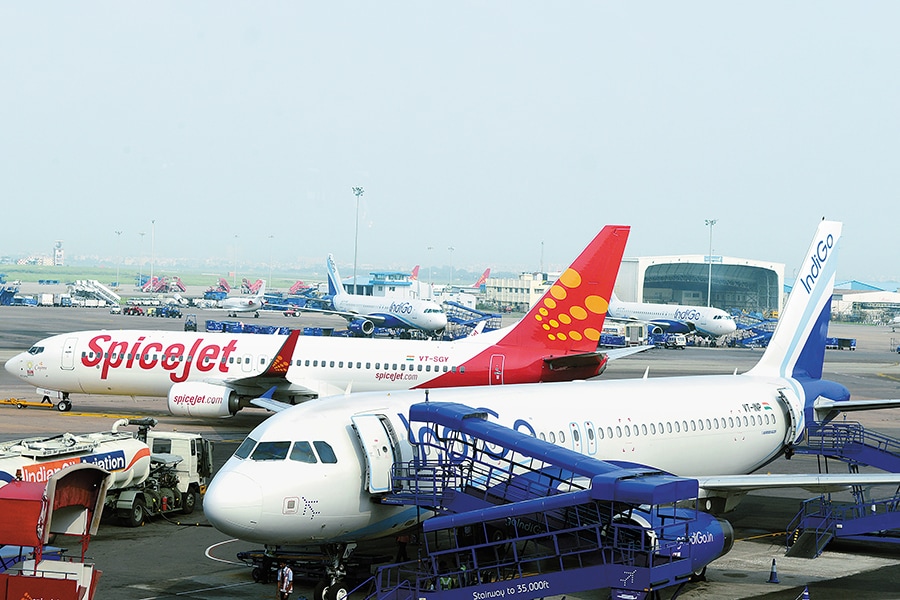
Mumbai: India’s aviation industry is facing a tough reckoning as safety concerns, soaring costs and limited competition threaten its explosive growth story, after a string of mishaps involving the dominant carriers.
The industry has grown rapidly, but safety, cost pressures and a near-monopoly by two airlines are threatening its growth. Air India and IndiGo, together accounting for about nine out of 10 domestic airline seats, have had a series of setbacks as the industry struggles to meet surging passenger demand.
Last month, an Air India flight from Phuket to New Delhi plunged about 300 feet, injuring 24 passengers, prompting increased safety scrutiny after reports that the captain tested positive for marijuana after landing.
IndiGo has ordered one-time drug screening for all its pilots, while an investigation into the incident is expected to provide further details.
The incident follows a crash of an Air India Boeing 787 Dreamliner travelling to London last year, killing 241 people. A separate safety audit reportedly pointed to about 100 lapses at the airline, including violations requiring urgent corrective action, and training deficiencies involving pilots of Boeing 787 and 777 aircraft.
The airline is under pressure from soaring costs as the closure of Pakistani airspace forces airlines to take longer routes, and higher jet fuel prices due to the Middle East conflict.
Ratings agency ICRA estimates that Indian airlines could collectively lose nearly $4 billion during the current fiscal year.
Air India’s losses reportedly more than doubled to $2.3 billion in the previous financial year, while IndiGo has posted losses for two consecutive quarters.
The financial pressure is also affecting expansion plans. IndiGo has suspended its wide-body operations, while Air India is reportedly considering delaying aircraft deliveries.
India’s airlines carried around 167 million passengers last year, more than double the number a decade earlier. More than 70 airports were added during the same period, while carriers ordered about 1,500 aircraft. Industry experts say the infrastructure, regulations and operating systems have struggled to keep up with the boom.
The dominance of Air India and IndiGo has also raised competition concerns, with several of India’s regional airlines going bust or being sold off over the past two decades.
The government has approved plans for two new airlines and is contemplating amendments to their charter to allow airport operators to own airlines.
However, experts caution against new entrants alone resolving the situation, with many underlying challenges, such as high operating costs and regulations, persisting. India’s aviation market has great potential for growth, but addressing its safety, profit, infrastructure and regulatory challenges will be key to maintaining its rapid expansion.