


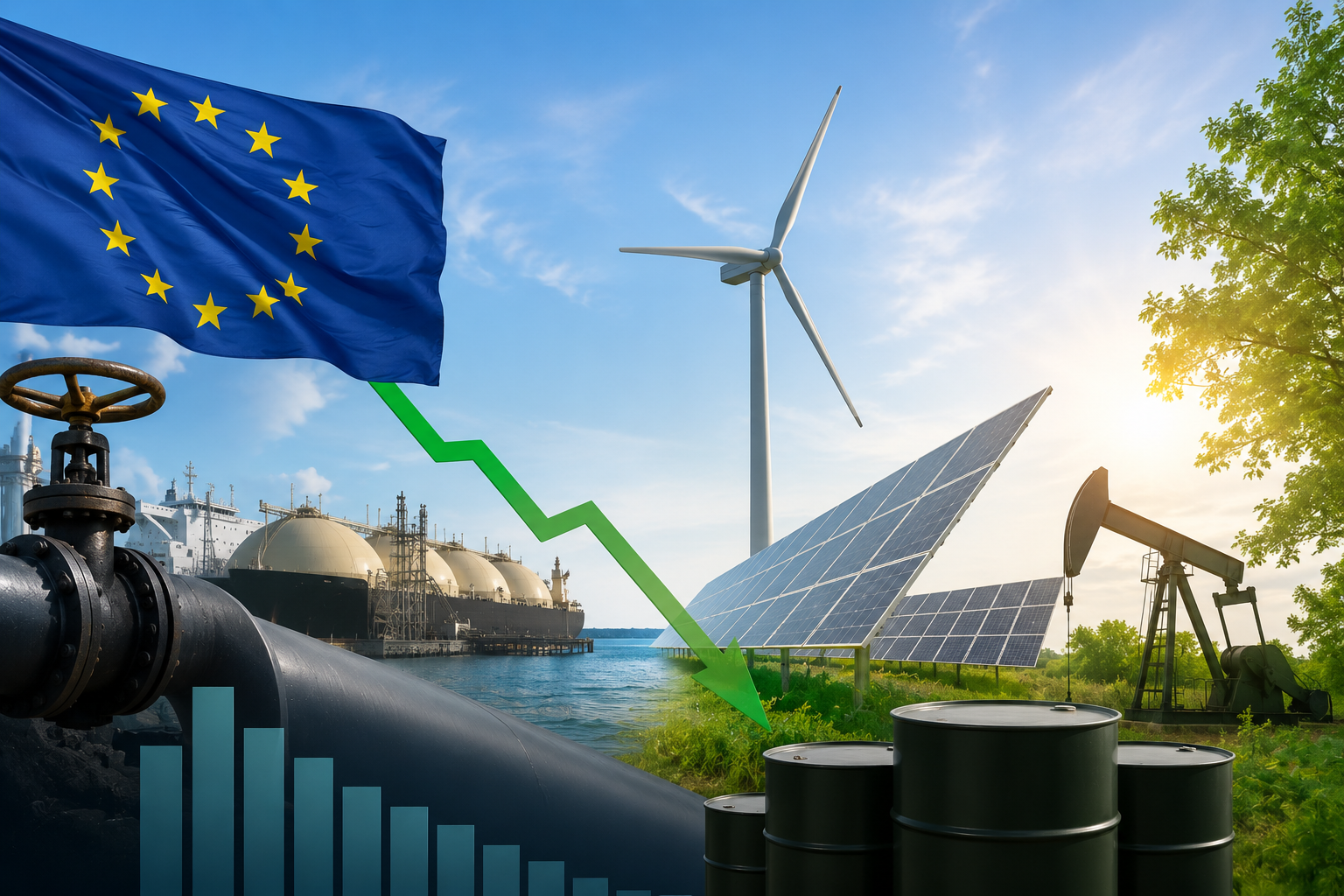
The European Union is slowly using fossil fuels from other countries. This is happening because of the problems in the Middle East. How are they affecting the world’s energy markets? People are getting worried about having energy in the long term.
A new study by the Institute for Energy Economics and Financial Analysis found that the European Union is importing liquefied natural gas. This is because many European countries want to avoid problems with energy markets and the high cost of importing energy. The study said that the European Union imported 1.2 per cent of liquefied natural gas. The United Kingdom imported 20 per cent less. This means that the whole region used 3 per cent of liquefied natural gas.
Energy experts say that this change shows that Europe needs to use different kinds of energy and not rely so much on fossil fuels from other countries. There are problems with getting energy from countries, such as high prices and not being sure if the energy will be available. Even though the European Union is importing liquefied natural gas overall, some countries are actually importing more. Germany is importing a lot more, with a 72 per cent increase. Italy and Belgium are also importing liquefied natural gas.
The study also found that the European Union still gets a lot of its liquefied gas from the United States and Russia. The United States provided 60 per cent of the European Union’s liquefied gas during the first 100 days of the problems in the Middle East. The high cost of importing energy is causing problems for the European Union. They expect to pay 60 billion euros for energy due to the crisis.
At the same time, renewable energy is becoming more popular in Europe. Solar and wind power helped the European Union save 51 billion euros per year by reducing the need for fossil fuels. People also want technologies like heat pumps and electric vehicles.
Experts think that the current problems could make Europe switch to renewable energy faster. This would help Europe be more independent in its energy and less affected by problems in parts of the world. It would also help with climate change and energy security.